Paris Opera House Tickets
Tours & tickets

Hand-picked by our editors — only the best 5 experiences from 22 reviewed.

Open today 10:00–17:00
Attendance: Moderate — autumn shoulder season
Auditorium access may be restricted due to rehearsals.
Free cancellation Instant confirmation Mobile voucher Skip-the-line Verified partner
Tickets

Choose your ticket

Verified partners for every tour, free cancellation where available, and instant confirmation on every booking.

Opera Garnier Theatrical Tour with Actress Guide 1 hr 30 min
Standard Entry

Opera Garnier Theatrical Tour with Actress Guide

★ 4.7 (195)
€40
per person
Instant Mobile voucher Flexible — change up to 24h

Step into a dramatized journey through Palais Garnier led by a performer sharing tales of ballet dreams

Reserve
Palais Garnier Opera House Guided Tour 45 min
Guided Experience

Palais Garnier Opera House Guided Tour

★ 4.4 (86)
$28
per person
Instant Mobile voucher Flexible — change up to 24h

Step inside Paris's opulent opera house with an expert guide and explore its Belle Époque grandeur

Reserve

Prices from verified partners. Availability updates in real time at checkout. Free cancellation policies apply where shown.

What you'll do

Inside a tour, step by step

  1. 01 15 min

    Grand Vestibule

    Begin by viewing the grand columns

Highlights

What you'll see inside the attraction

The landmarks, rooms, and views travelers on this tour remember — all visible on a single visit.

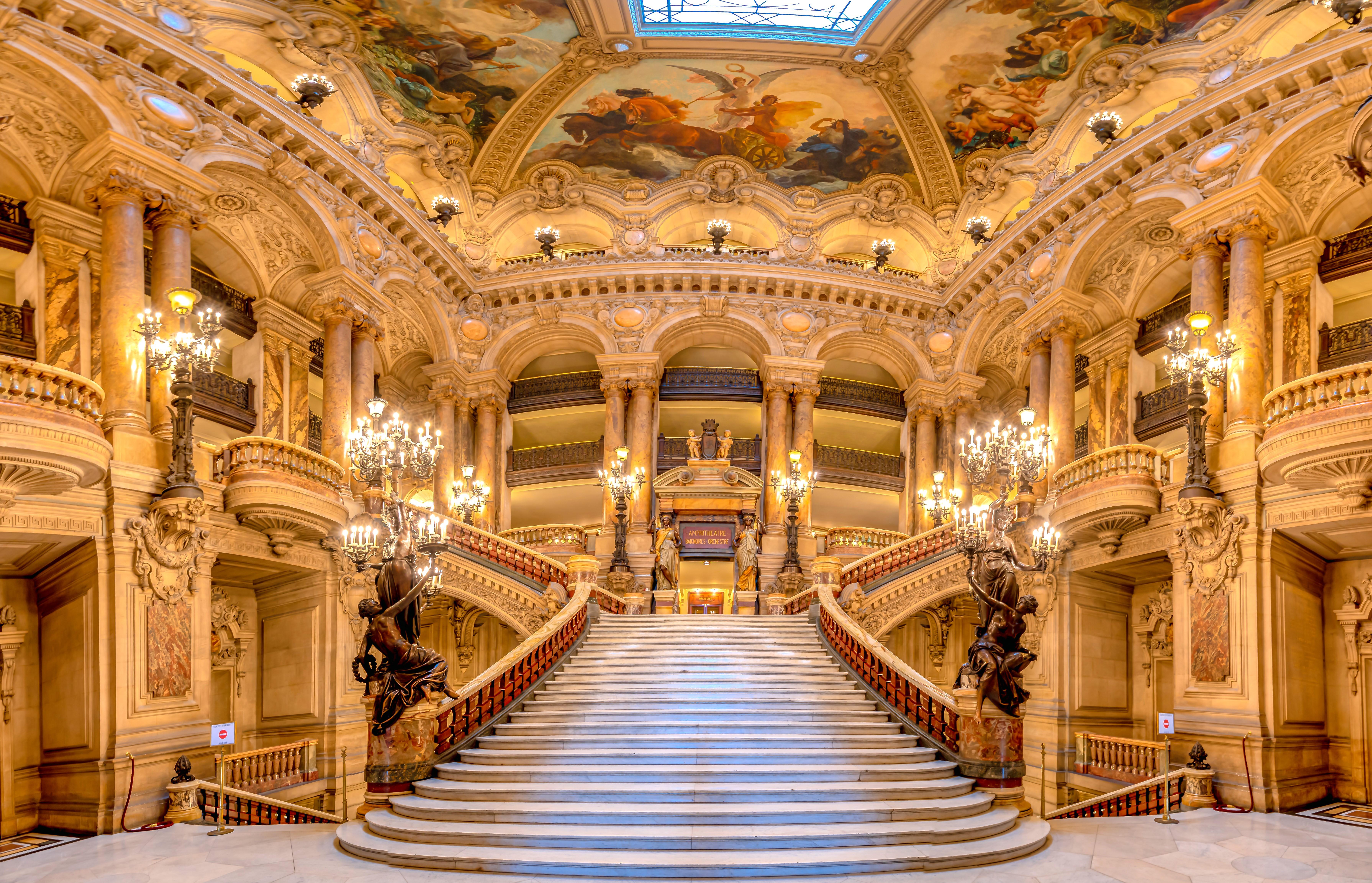
Grand Staircase

The iconic marble stairs designed by Charles Garnier, featuring gilded balustrades.

Grand Foyer

A lavish hall inspired by the Galerie des Glaces, decorated with mirrors and frescoes.

Chagall Ceiling

The famous auditorium ceiling painted by Marc Chagall in 1964, contrasting with the ornate gold.

Pythia Basin

A fountain featuring a bronze statue of Pythia, located near the grand stairs.

Glacier Rotunda

An elegant room designed for intermission breaks, showcasing ornate ceilings and mirrors.

Head to head

Palais Garnier vs. Opéra Bastille — Choosing Your Paris Opera House Tours Experience

They complement each other, though most visitors who do both call the Palais Garnier the more visually thrilling choice for architectural splendor. While visitors often seek paris opera house tours tickets for the historic venue, the modern Bastille offers a superior acoustic experience for contemporary performance.

Feature Top pick Palais Garnier Opéra Bastille
Architectural Style
Modern minimalist
Primary Use
Contemporary performance
Visitor Focus
Acoustic performance quality
Atmosphere
Functional and industrial
Neighborhood
Bastille quarter
Available booking type
Performance attendance only

Verdict: Choose the Palais Garnier for a historic paris opera house tours tour experience, or visit Opéra Bastille if you prioritize modern, world-class musical productions over paris opera house tours tours.

How your ticket works

Book your ticket in 3 steps

  1. 01

    Book online

    Choose your ticket, select your date, and reserve in under two minutes. Secure checkout handled by our verified partner.

  2. 02

    Receive your mobile voucher

    Instant confirmation by email, with a mobile voucher you can save offline. No printing, no queuing at a collection desk.

  3. 03

    Show & enter

    Arrive at the entrance, show your voucher on your phone, and walk in. Most tickets include priority or skip-the-line access.

Plan your visit

Everything you need to know before you go

Practical details for your visit straight from our verified partners — hours, access, rules, and how to get there.

Open today · 10:00–17:00
Opening hours
10:00–17:00 daily
Address
Place de l'Opéra, 75009 Paris, France
Accessibility
Elevator access for reduced mobility
Best arrival
10:00–12:00 for optimal natural light
Security
No lockers for large bags available
Navigation
Entrance at corner of Rue Scribe and Rue Auber
Mon
10:00–17:00
Tue
10:00–17:00
Wed
10:00–17:00
Thu
10:00–17:00
Fri
10:00–17:00
Sat
10:00–17:00
Sun
10:00–17:00
Closed on: Jan 1 (New Year's Day), May 1 (Labor Day), Dec 25 (Christmas Day)
Main entrance

Entrance Desk

Corner of Rue Scribe and Rue Auber

Follow signs for self-guided entry

Address
Place de l'Opéra, 75009 Paris, France
Security
No lockers for large bags available
Navigation
Entrance at corner of Rue Scribe and Rue Auber

How to get there

🚆
Public transport · 45 min · Included in Paris transit pass

Use Metro Opéra (Lines 3, 7, 8) or RER Auber (Line A) for direct access to the opera house.

🚕
Taxi · 20 min · Varies by traffic

Request drop-off at Place de l'Opéra.

Dress code

Casual attire is permitted, but modest dress is recommended for the historic interiors. Comfortable footwear is advised for navigating the marble stairs.

Bags & security

Suitcases and large travel bags are prohibited inside the Palais Garnier under the Vigipirate security plan. Please plan for luggage storage elsewhere in Paris before arriving.

Photography

Photography is allowed during tours for personal use, provided no flash or tripods are used. Recording of performances is strictly forbidden.

Accessibility

The Palais Garnier provides an accessible elevator for visitors with reduced mobility. Entrance for these guests is located at the corner of Rue Auber and Rue Scribe.

Mobile phones

Mobile phones are permitted for photography and as part of the self-guided tour experience. Please keep devices on silent while exploring the silent zones.

What to bring

  • Valid ID
  • Electronic ticket
  • Smartphone for guide
  • Comfortable shoes
  • Camera
  • Small bag

Not allowed

  • Suitcases
  • Travel bags
  • Glass bottles
  • Plastic bottles over 50 cl
  • U-locks
  • Large chains
  • Weapons
  • Pocket knives
  • Tools
  • Aerosol dispensers
  • Teargas
  • Flammable substances

Families & strollers

Children aged 12 and under receive free admission. The opulent decor is often of interest to younger visitors, though no specific play areas are provided.

Food & drink

Food and drink are not permitted within the exhibition areas. Visitors may find cafes and restaurants in the surrounding 9th arrondissement.

Pets

Pets are not permitted inside the Palais Garnier. Assistance animals are allowed with proper documentation.

Good to know

The Palais Garnier is an active performance venue, so the main stage may be closed for rehearsals. Consult the official site before visiting to manage expectations.

Meeting point

Where to find us

Entrance Desk

Corner of Rue Scribe and Rue Auber

Follow signs for self-guided entry

Get directions
Around your visit

Everything else worth knowing

Best time to go, insider tips, nearby landmarks, and the cancellation fine print — flip through to skim what matters to you.

Best time to visit

How crowds, weather, and events shift across the year.

Autumn

Enjoy the cooler weather and manageable crowds in the Grand Foyer.

Spring

Optimal for exploring the exterior architecture and nearby gardens.

Summer

Expect peak international visitors throughout the building.

Winter

Often quieter, providing a calm atmosphere for interior photography.

Helpful tips for your visit

Small details that turn a good visit into a great one.

Book Early

Tickets sell out quickly; book your visit through the official site in advance. Use the 10:00–12:00 window to ensure the best light for photos of the Grand Foyer.

Nearby landmarks

Non-bookable sights within a short walk — free to visit, easy to pair.

Galeries Lafayette

5 min walk

A historic department store known for its stunning glass dome.

Cancellation policy

Flexible, no hidden fees.

Tickets are non-refundable and non-exchangeable once purchased. Visitors residing outside the EEA pay the standard adult admission fee of 25 EUR.

Where to stay

Hotels & districts near the attraction

Hand-picked options within walking distance — pick a district for vibe, or a specific hotel for convenience.

InterContinental Paris

2 min walk
luxury

Historic hotel located right next to the opera.

About

The place, in context

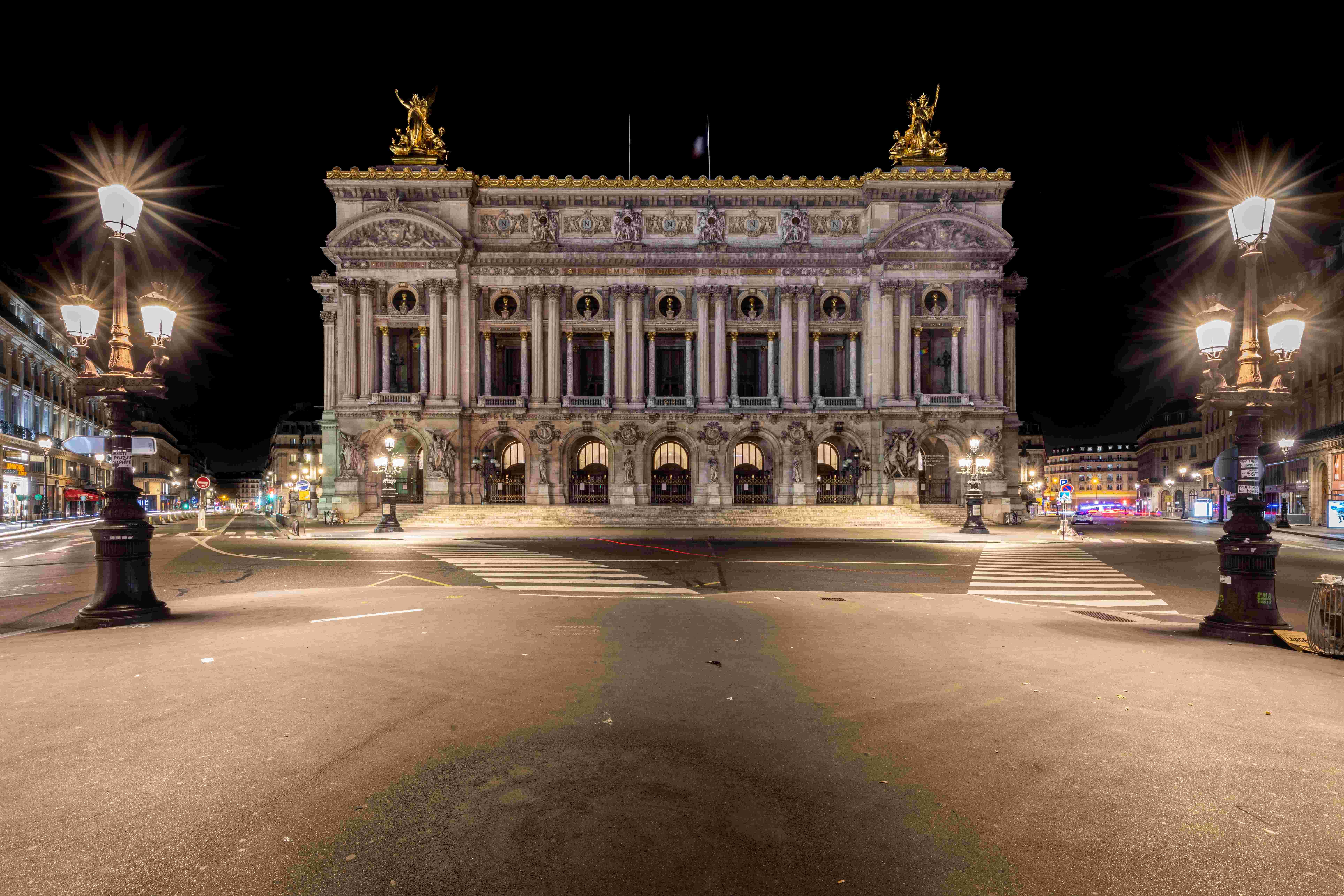
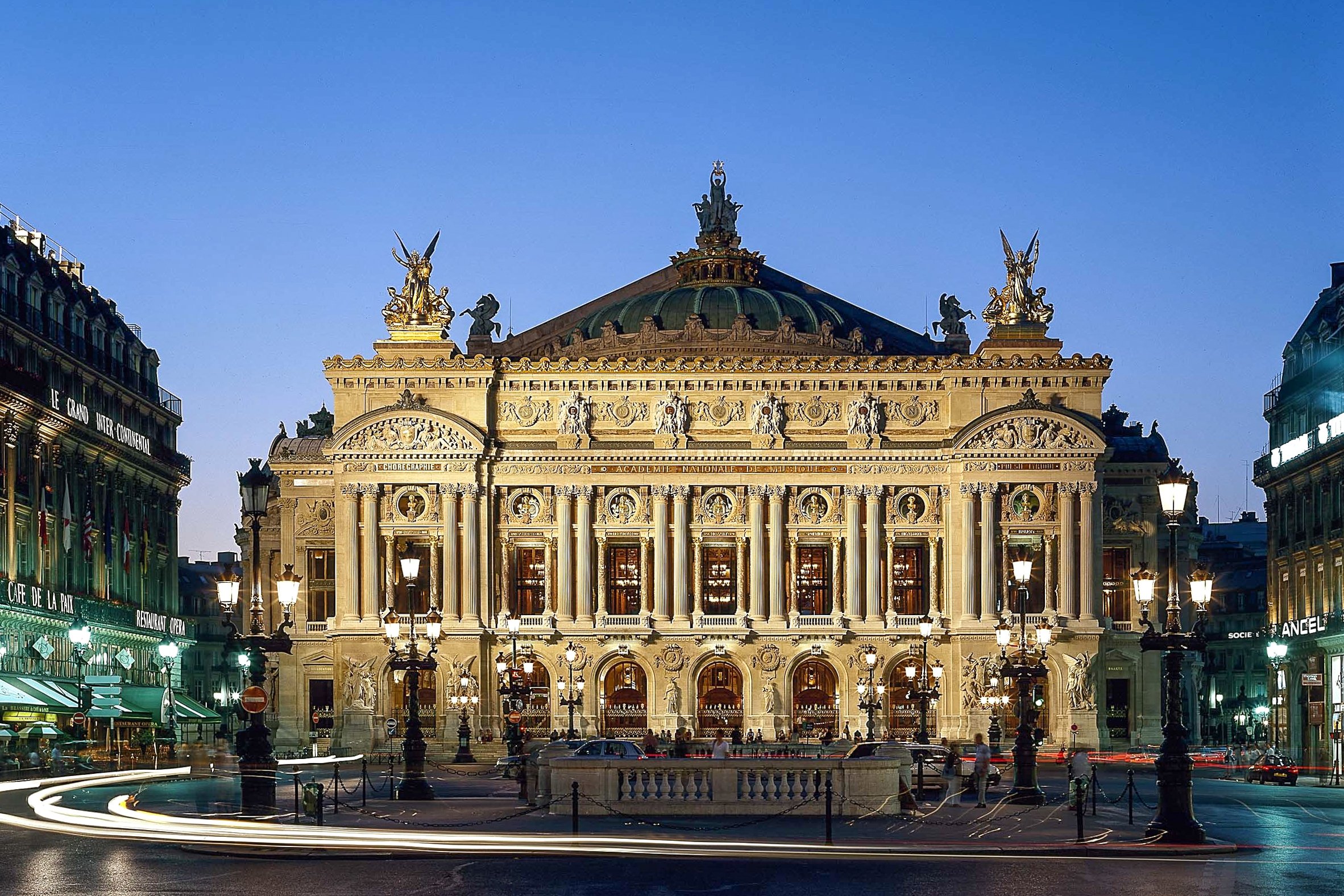
The Palais Garnier opened in 1875 after fourteen years of construction that began when Napoleon III commissioned Charles Garnier to design a showpiece for the Second Empire. Garnier's blueprint called for seventeen thousand square metres of marble, bronze, and gilt, anchored by a Grand Staircase hewn from white Seravezza stone and onyx balustrades that rise thirty metres. The building survived the Commune fires, two world wars, and a 1896 chandelier collapse that killed a concierge, cementing its place in Gaston Leroux's 1910 novel and subsequent mythology. Today the opera house functions as both a working stage and a monument to theatrical excess. The auditorium seats 1,979 beneath Marc Chagall's 1964 ceiling, a kaleidoscope commissioned by André Malraux that replaced the original Jules-Eugène Lenepveu panels and sparked fierce preservation debate. The Grand Foyer stretches fifty-four metres, its frescoed vaults and crystal chandeliers modeled on Versailles' Hall of Mirrors, while the Salon du Glacier displays neo-baroque excess through allegorical sculptures and medallion portraits of composers. The underground lake that inspired Leroux still collects runoff five levels below the stage, a cistern maintained by divers who descend twice annually to check concrete integrity. Paris Opera House tours grant access to spaces closed during evening performances. The Avant-Foyer's mosaic ceilings depict the history of music through gilded tesserae, and the Rotonde des Abonnés preserves its original function as a private lounge for season-ticket holders. Theatrical tour options pair the architecture with costumed guides who perform excerpts from Phantom or La Traviata in the loggia boxes. Self-guided visits allow closer inspection of Paul Baudry's ceiling medallions in the Grand Foyer, each representing a moment from operatic or mythological canon. The Pythia mosaic in the entrance atrium, Garnier's tribute to the Delphic oracle, remains one of the few original design elements unaltered since inauguration. Morning light through the south-facing clerestory windows illuminates gilt detailing that artificial stage lighting cannot match, making the 10:00 arrival window optimal for visitors focused on architectural photography rather than performance schedules.

"The underground lake still collects runoff five levels below the stage, a cistern maintained by divers who descend twice annually."
Your experience

What a tour day looks like

A step-by-step walkthrough of the visit — what you'll see, how long each stage takes, and the details that matter.

You arrive at Place de l'Opéra by 10:00, when morning sun strikes the bronze quadriga on the roofline and crowds remain sparse. Entry is through the western pavilion at 25 EUR for standard admission. The Grand Staircase rises immediately ahead, its double helix of white marble ascending toward the first landing where allegorical statues frame the archway. You pause at the halfway point to photograph the onyx balustrades against the frescoed vault above. The Grand Foyer stretches left, its parquet floor reflecting rows of crystal chandeliers that hang from Paul Baudry's ceiling panels. Each of the seventeen window bays overlooks the Avenue de l'Opéra, and you trace the gilt molding that frames mirrors tall as the twelve-metre ceiling. The auditorium entrance opens next, revealing Chagall's ceiling in fragments as ushers permit viewing from the orchestra level. Red velvet seats descend in horseshoe tiers toward the stage, and you note the chandelier's bronze frame holding three hundred forty bulbs. Guided Paris Opera House tours continue through the Rotonde des Abonnés, where original upholstery survives on Second Empire settees, then into the Salon du Glacier for closer study of the zodiac medallions ringing the dome. Theatrical tour variants add a costumed performance in Box Five, the loge Leroux designated for the Phantom. You exit through the eastern pavilion after ninety minutes, the Pythia mosaic underfoot as you descend to street level.

Frequently asked

Frequently asked questions about paris opera house tours tickets

What are the opening hours for paris opera house tours?

The Palais Garnier is open daily from 10:00–17:00.

Can I bring my backpack into the Palais Garnier?

Suitcases and large travel bags are prohibited due to security, but small bags are typically allowed.

Are paris opera house tours tickets refundable?

No, tickets for paris opera house tours are non-refundable and non-exchangeable.

Is photography allowed during my visit?

Yes, you may take photos for personal use without flash or tripods during your visit.

When is the best time for paris opera house tours?

The best arrival window is 10:00–12:00 to avoid crowds.

Is the auditorium always open for viewing?

Access to the auditorium is not guaranteed as it is often closed for rehearsals.

Do I need to print my paris opera house tours tickets?

Digital tickets are accepted on your mobile device for paris opera house tours.

Are children free for paris opera house tours?

Yes, children aged 12 and under enjoy free entry to the building.

Can I store my luggage during the tour?

There are no luggage storage facilities available for visitors at the Palais Garnier.

What is the standard price for paris opera house tours?

Standard adult admission for visitors outside the EEA is 25 EUR.